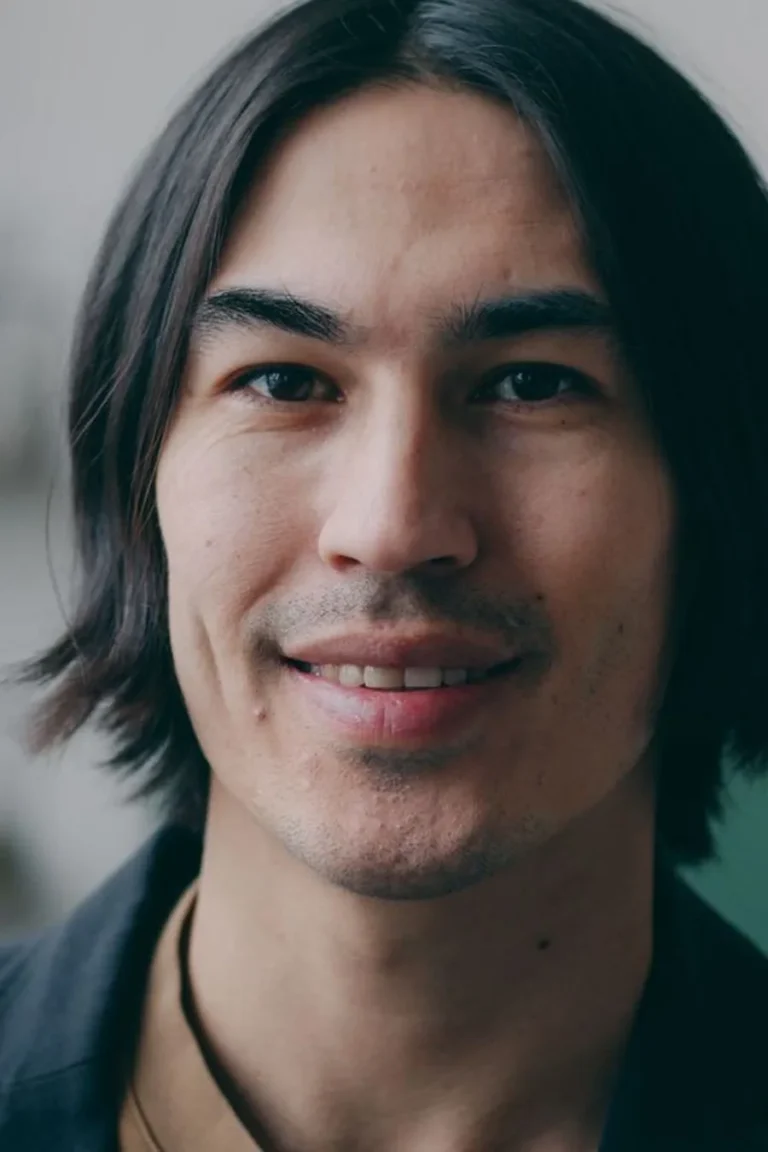
13 Modern Mullet Haircuts for Men
The modern mullet is not the costume-party cut you are picturing: today’s version is textured, tailored, and worn everywhere from barbershop posters to the office. These 13 modern mullet haircuts for men cover the full spectrum — faded, tapered, curly, bleached, subtle enough for a dress code, and long enough to make no apologies — each with its length, its upkeep level, and the exact words to ask your barber.
Every mullet is really two haircuts — business at the front, length at the back — and the modern versions differ in how hard that contrast is. If you want the softer, all-layered alternative instead, start with our wolf cut ideas for men; this list is for men who want the back length to be the point.
Quick picks — the shortlist
- The classic modern mullet — the balanced version to start from.
- The short, subtle mullet — the one that passes a dress code.
- The curly mullet — natural curl makes the back length bounce instead of hang.
- Mullet with a mid fade — the sharpest, barbershop-fresh take.
13 modern mullet haircuts to show your barber
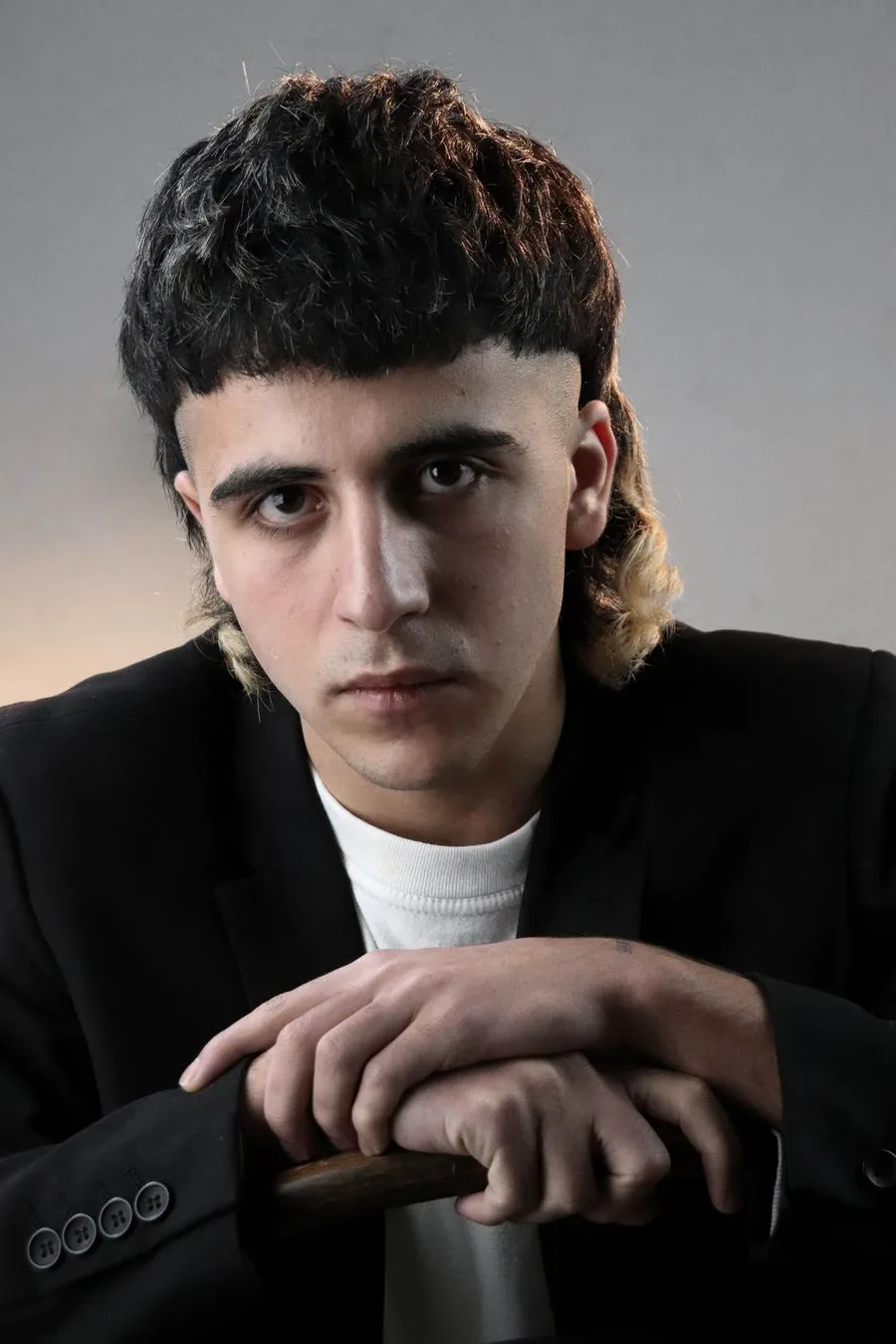
1. The classic modern mullet
The reference point: a textured, medium-length top worn forward, sides kept short and neat, and the back left long enough to clear the collar and move. It suits straight to wavy hair and oval, square or heart faces. The top runs 3–5 inches (8–13 cm), the sides around 1 inch (2.5 cm), and the back 6–8 inches (15–20 cm). Maintenance is medium: the shape is forgiving but the sides need tidying. Ask for: a modern mullet with a textured top and a clean, medium-length back.
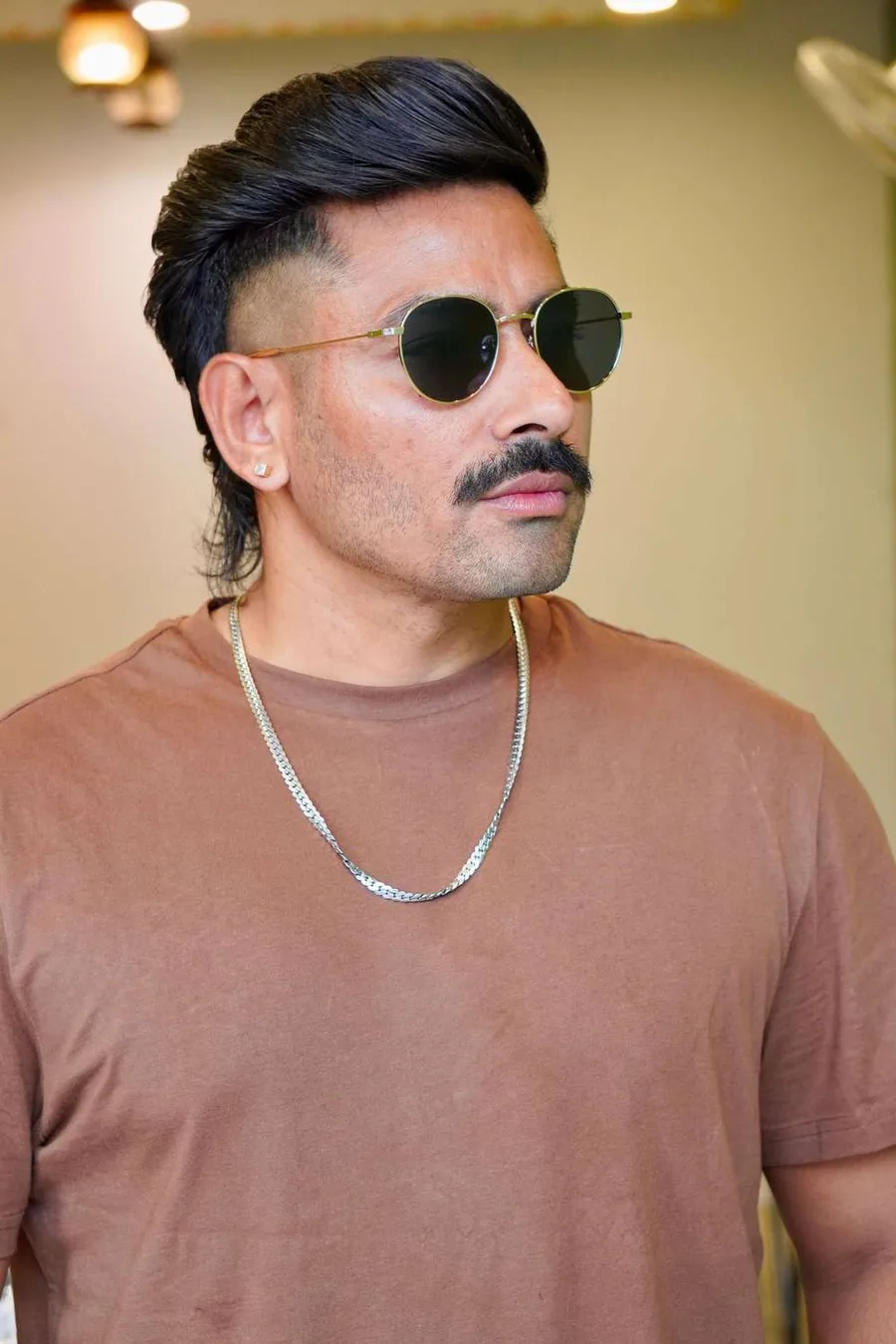
2. Mullet with a mid fade
The sharpest version here: the sides are faded through the mid lengths, the top stays textured and forward, and the back keeps its full mullet length, so the contrast is deliberate and clean. It suits straight to wavy, medium to thick hair and most face shapes. The fade sits around a 0.5–2 guard equivalent at its shortest, the top is 3–4 inches (8–10 cm), and the back 6–8 inches (15–20 cm). Maintenance is high — fades show growth within two weeks. Ask for: a mullet with a mid fade and the back left long.
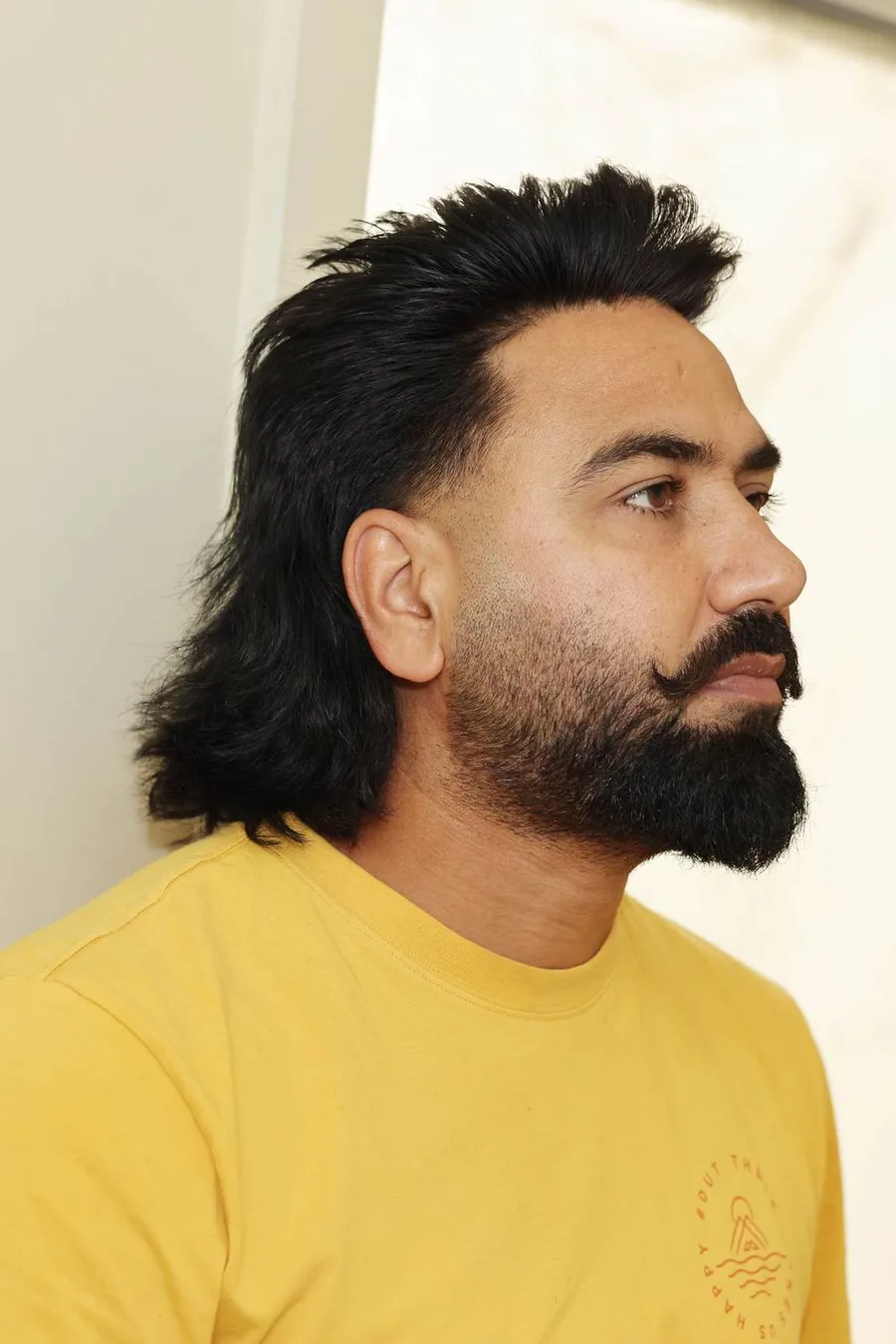
3. Mullet with a beard
The long back and the beard balance each other: volume at the jaw echoes the length at the neck, so the whole profile reads intentional rather than grown-out. It suits wavy to curly hair and oval, square or long faces. The top is 4–5 inches (10–13 cm), the back 7–9 inches (18–23 cm), and the beard is best kept shaped, not wild. Maintenance is medium, split between hair trims and beard tidies. Ask for: a mullet with a long back, shaped to sit with my beard.
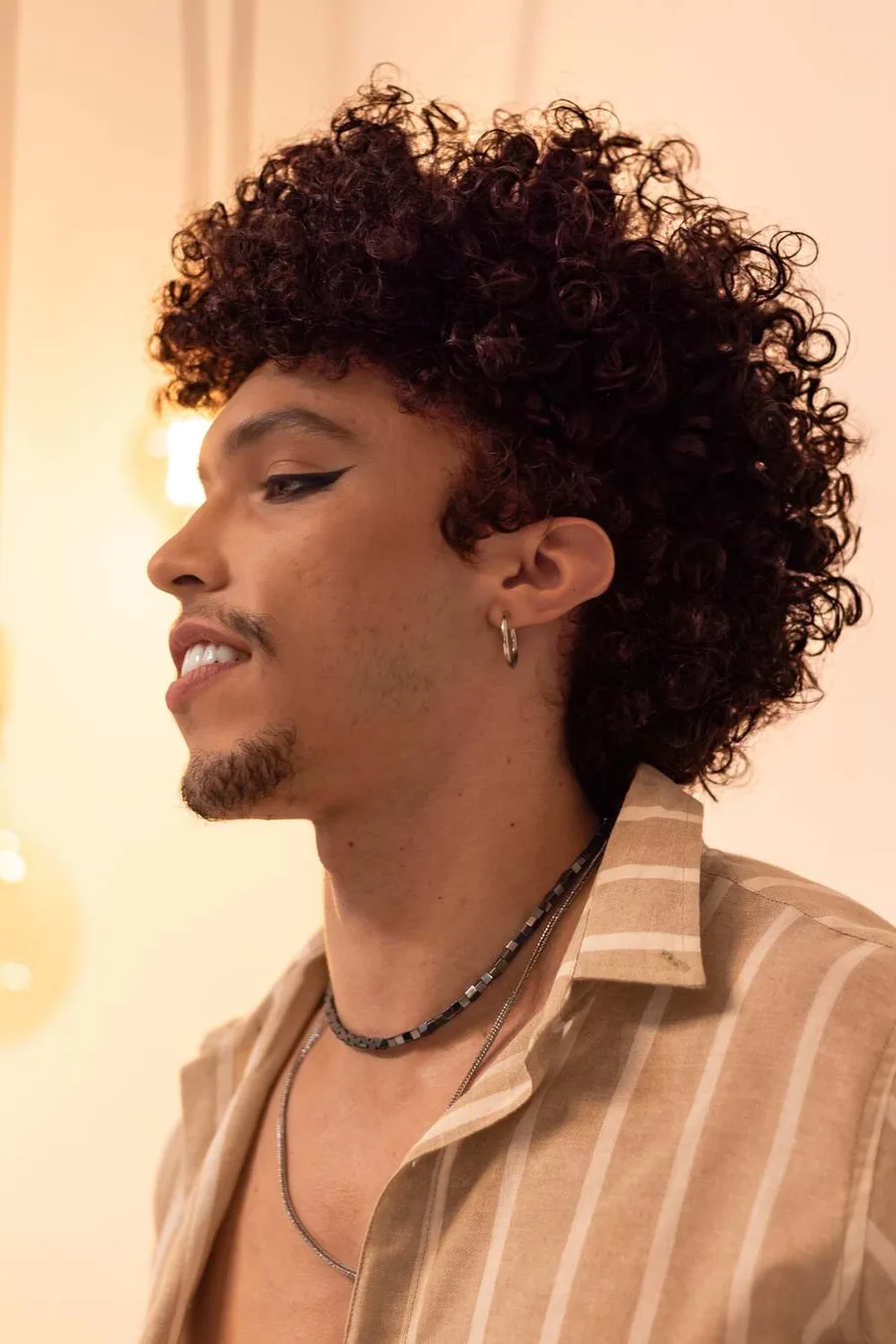
4. The curly mullet
Curls change the mullet for the better: the back length bounces into defined spirals instead of hanging straight, and the top keeps springy texture with the sides cut shorter to control width. It suits naturally curly hair of most densities and round, oval or square faces. Cut dry, the top lands at 3–4 inches (8–10 cm) and the back at 6–8 inches (15–20 cm) once sprung. Maintenance is low to medium — curls hide the grow-out lines. Ask for: a dry-cut curly mullet with shorter sides.
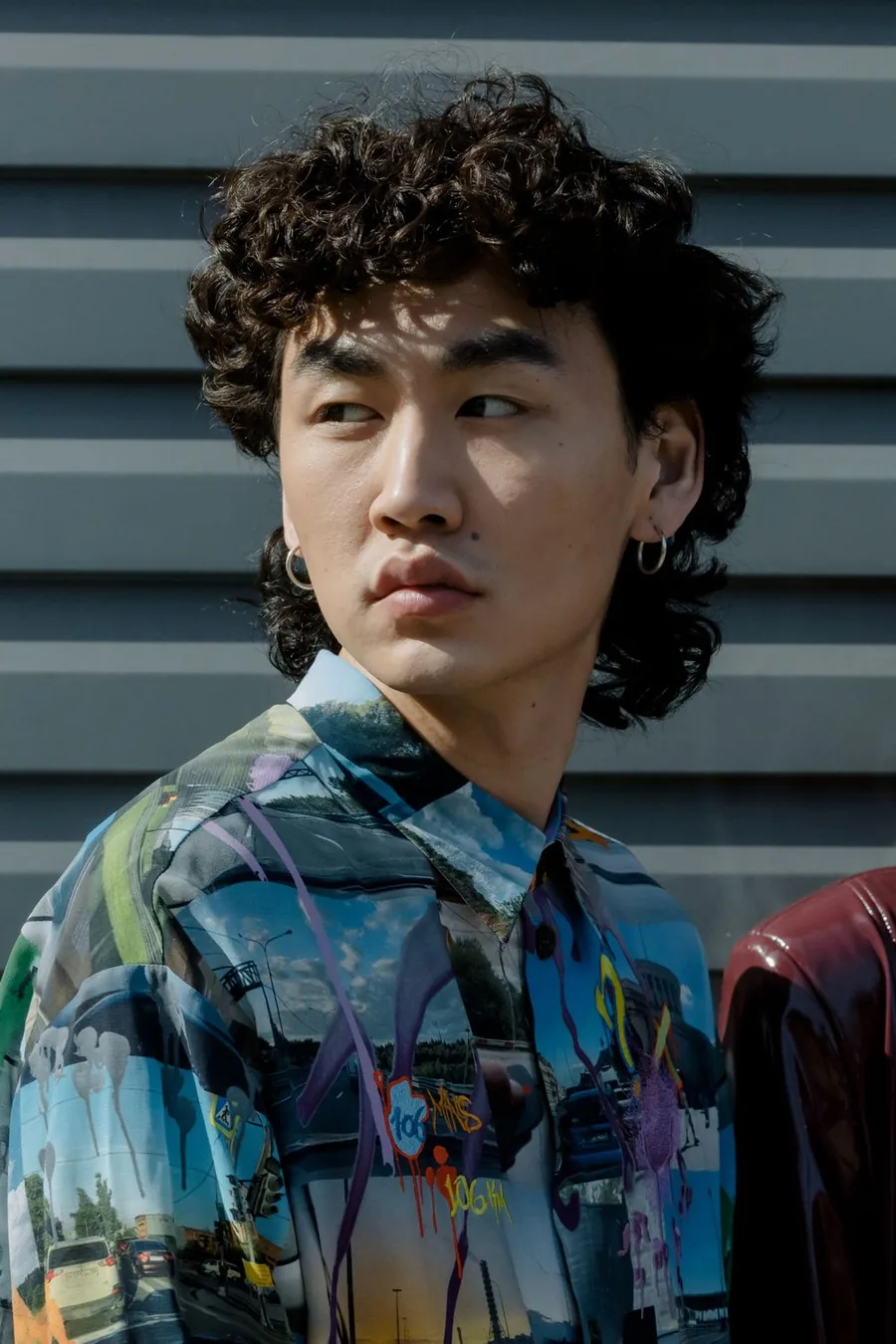
5. Curly mullet with a fringe
A curly fringe sits across the forehead and the back falls in long curls — the softest curly version, with none of the sharp lines of the faded takes. It suits loose to defined curl patterns and heart, oval or long faces, which the fringe shortens visually. The fringe is cut long, about 4 inches (10 cm) stretched, springing to brow level; the back reaches 7–9 inches (18–23 cm) dry. Maintenance is low to medium. Ask for: a curly mullet with a curly fringe, cut dry.
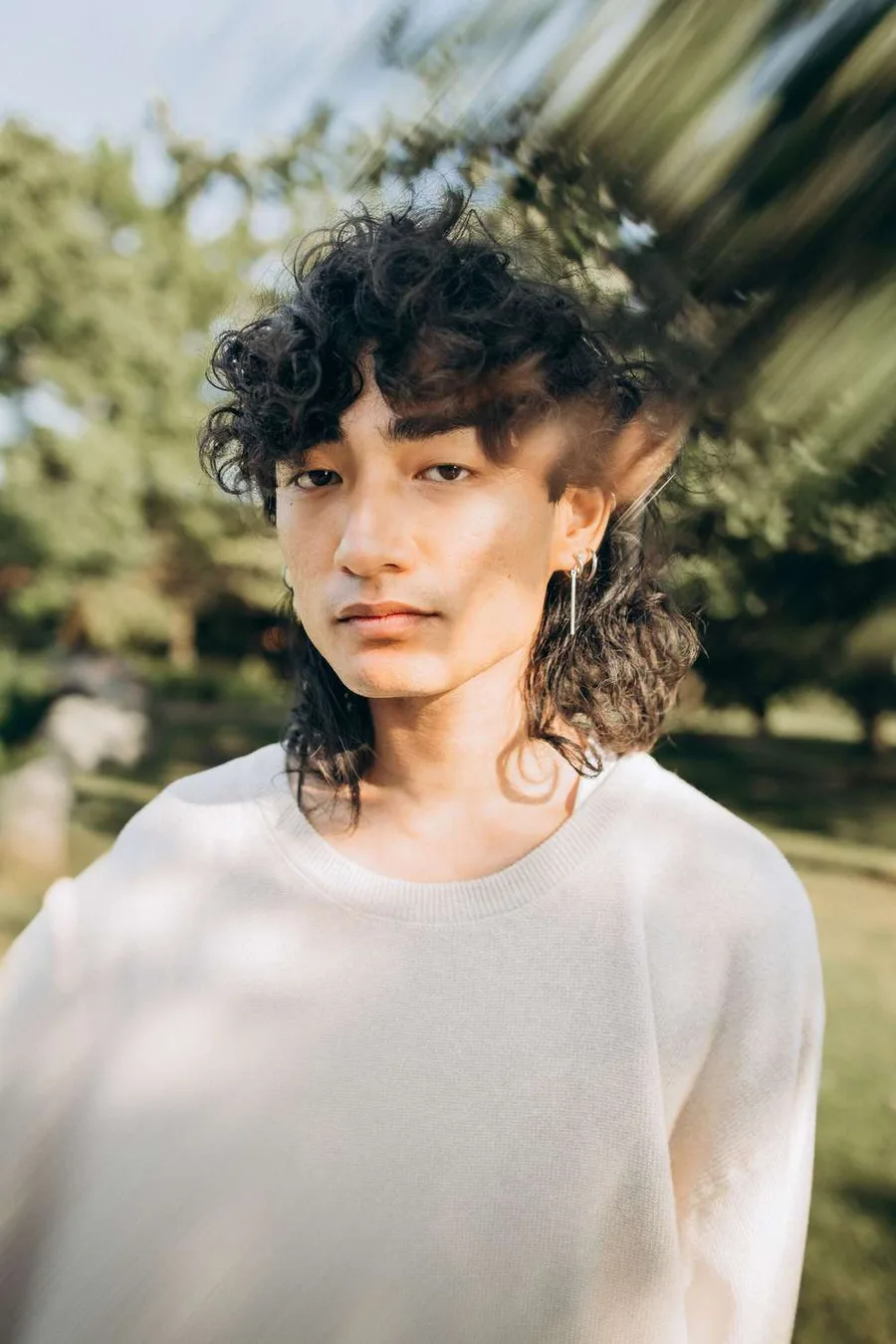
6. The long curly mullet
The maximum-statement curly version: a shorter curled top and sides, then length that keeps going down the back in full spirals. It suits thick, strong curl patterns and oval or long faces that can carry the silhouette. The back runs 9–12 inches (23–30 cm) dry, with the top layered at 3–5 inches (8–13 cm). Maintenance is medium — long curls are a wash-day commitment even when the cut itself is forgiving. Ask for: a long curly mullet, cut dry with the back kept full.
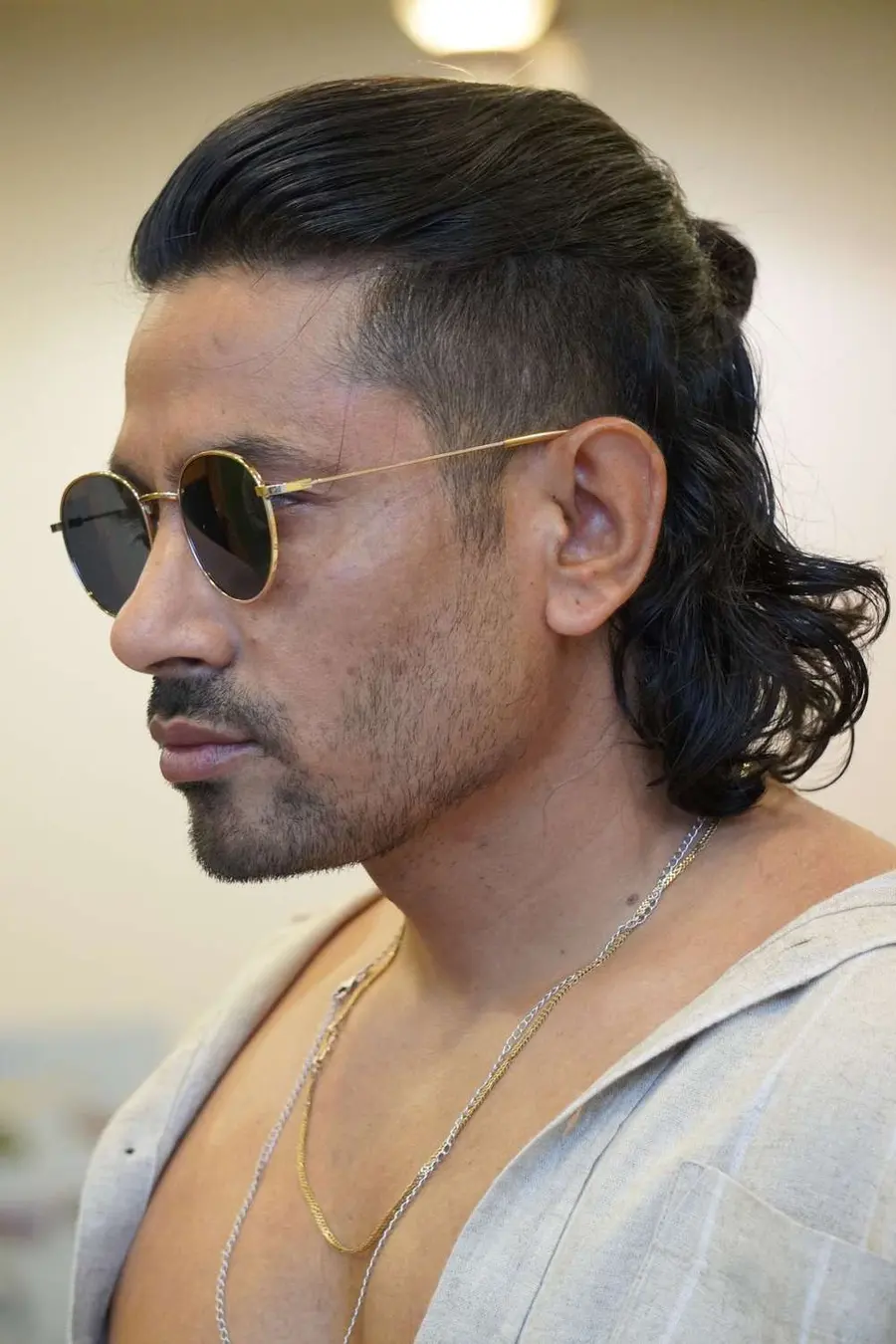
7. Mullet with shaved sides
The boldest contrast on the list: the sides are taken right down, the top is left longer and swept back, and the back hangs long and wavy — a true two-part haircut with nothing blended about it. It suits straight to wavy, thick hair and square or oval faces. The sides sit at a 0–1 guard equivalent, the top 4–6 inches (10–15 cm), and the back 7–10 inches (18–25 cm). Maintenance is high: shaved sides need refreshing every two to three weeks. Ask for: a mullet with shaved sides and a long back.
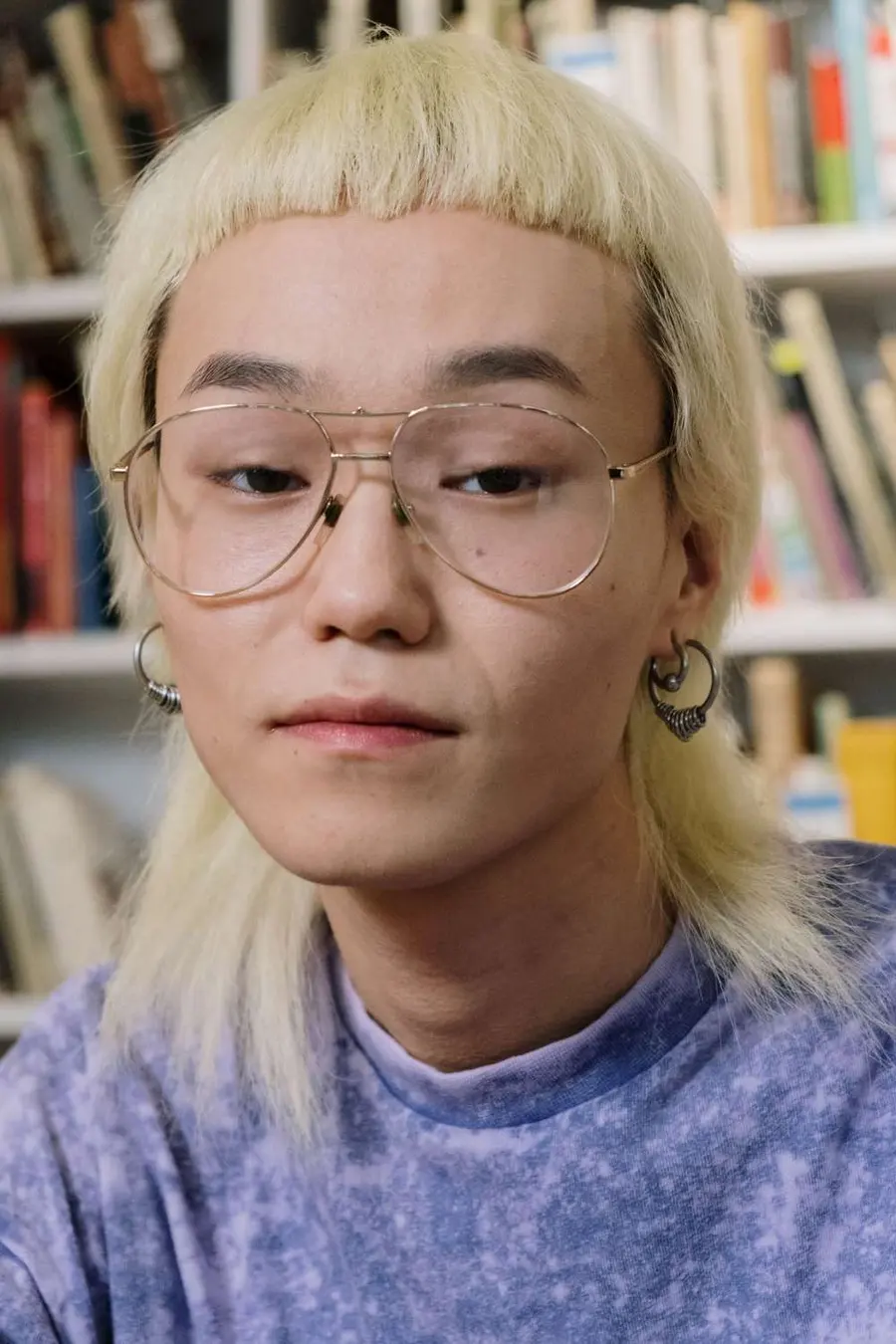
8. The bleached mullet with a micro fringe
Color does the talking: bleached lengths, a short cropped micro fringe at the front, and the back left long and straight — the most fashion-forward cut here. It suits straight to wavy hair and oval or heart faces. The top is 3–4 inches (8–10 cm), the fringe just 1–2 inches (2.5–5 cm), and the back 7–9 inches (18–23 cm). Maintenance is high, between the cut and the color upkeep. Ask for: a mullet with a micro fringe — and book the bleach separately with a colorist.
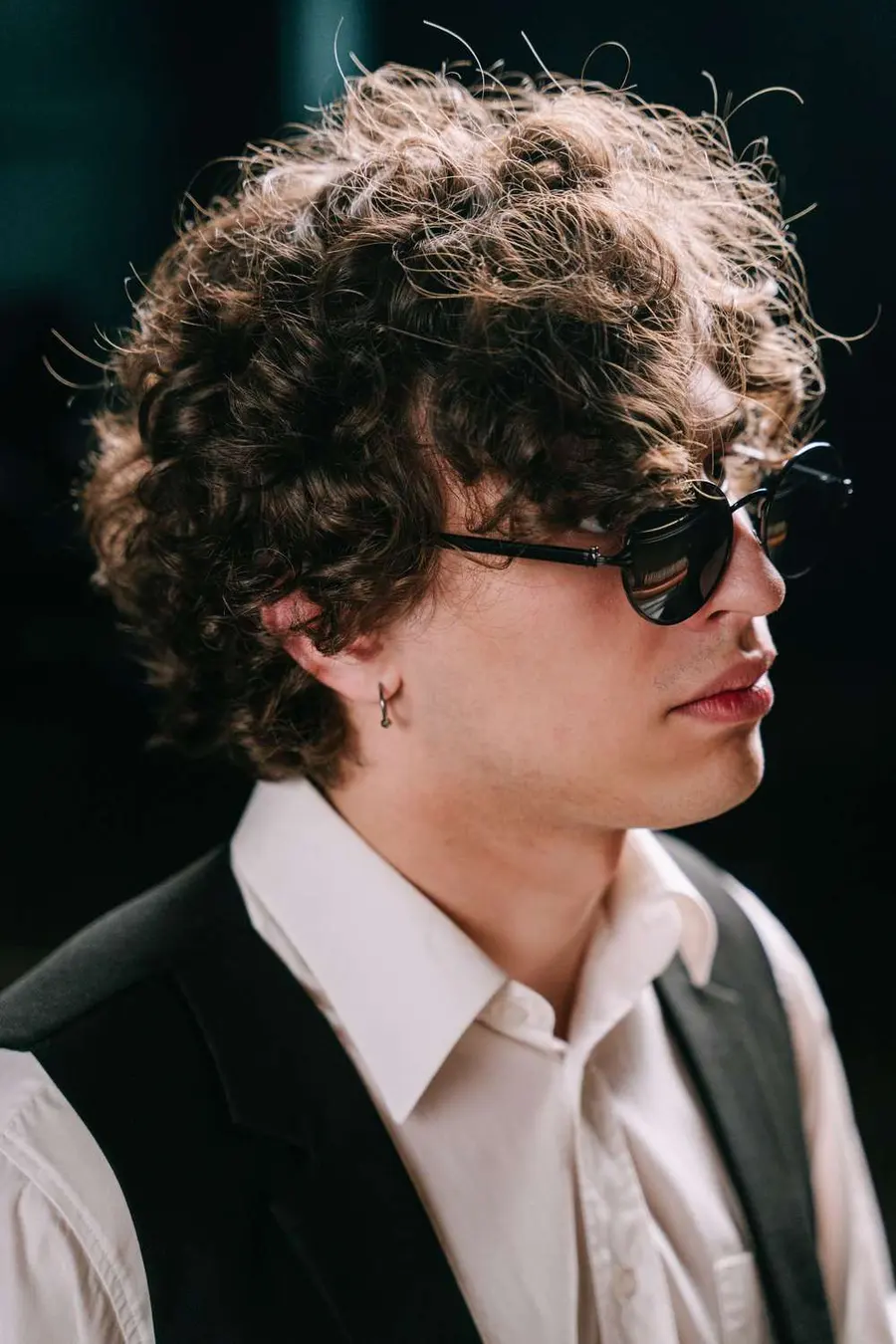
9. The soft, wavy mullet
Loose waves soften every line of the mullet: a medium textured top, scissored sides with no clipper work, and a wavy back that brushes the shoulders. It suits wavy to loose-curly hair and most face shapes, and it is the easiest bold version to wear casually. The top is 4–5 inches (10–13 cm) and the back 7–9 inches (18–23 cm). Maintenance is low to medium: the waves do the styling. Ask for: a soft wavy mullet, all scissor-cut.
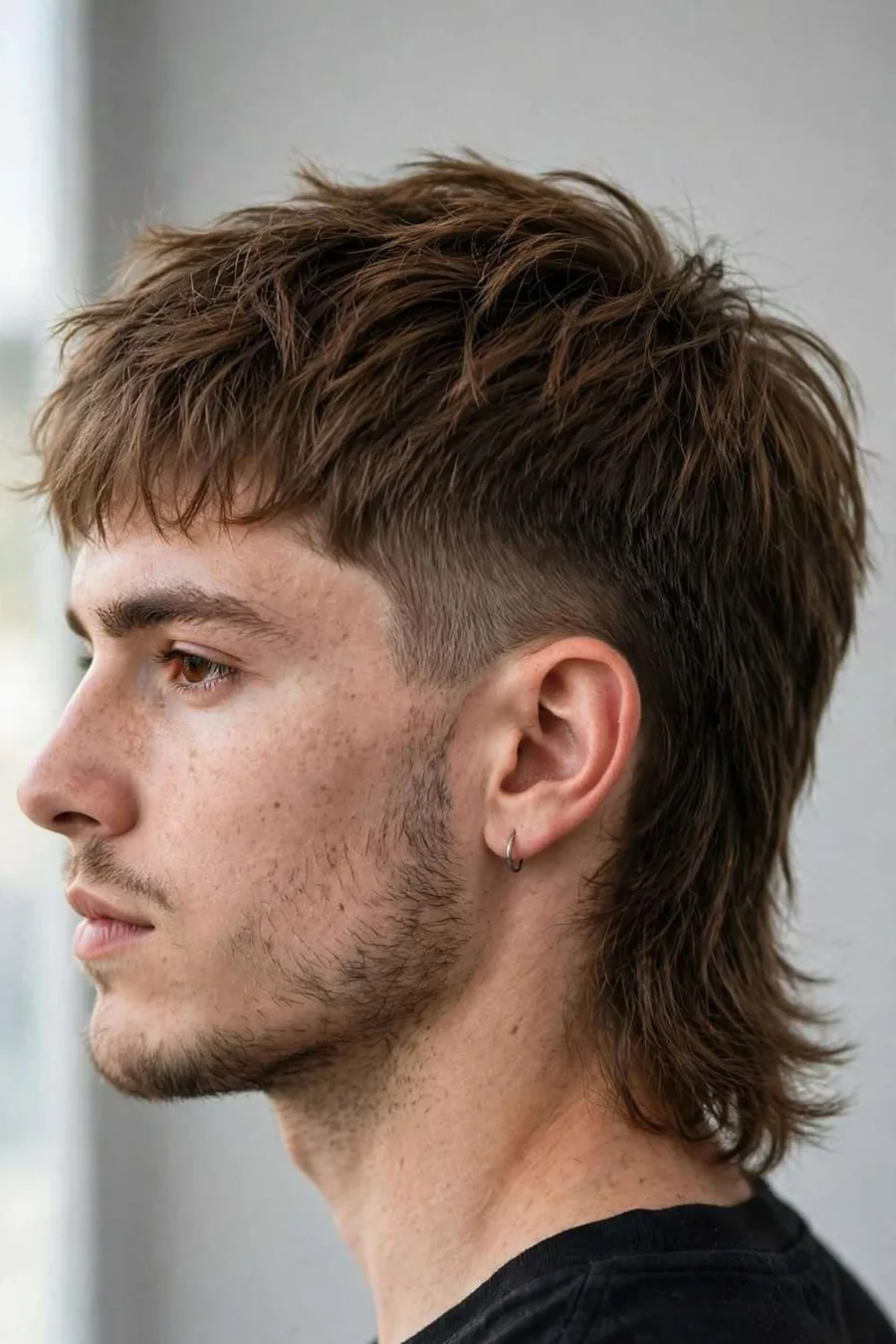
10. Mullet with a low taper
The polite fade alternative: the sides taper gradually and low, keeping a little scissor-finished length instead of skin, while the back keeps its signature length. It suits straight to wavy hair and any face shape, and it reads tidy from the front. The sides taper to around 0.5–1 inch (1.5–2.5 cm) at the shortest, the top is 3–5 inches (8–13 cm), and the back 6–8 inches (15–20 cm). Maintenance is medium. Ask for: a mullet with a low taper, no harsh fade line.
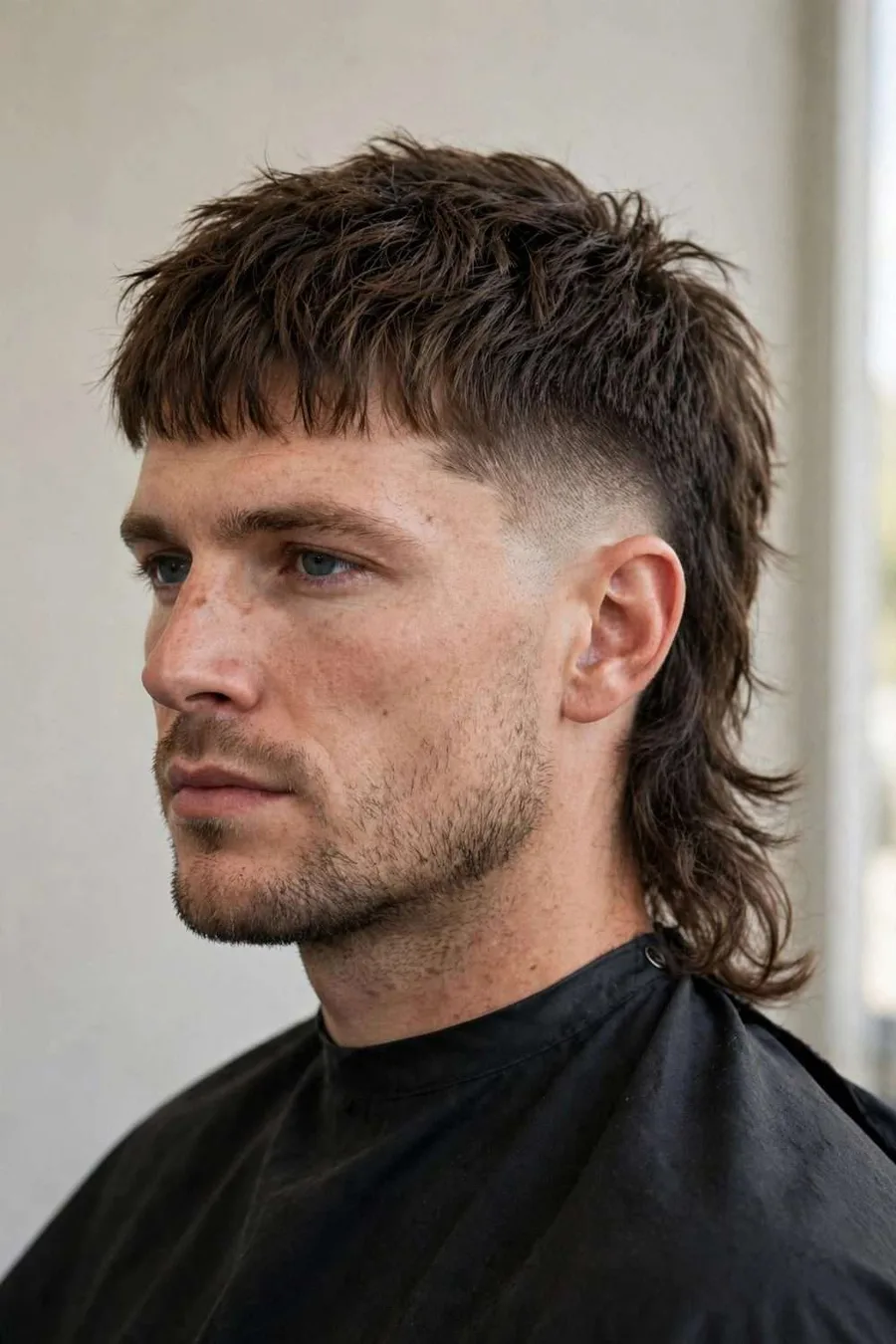
11. The textured crop mullet
A cropped, choppy top with a short fringe at the front — the French-crop family — spliced onto a longer, textured mullet back. It suits straight to wavy, thick hair and square or oval faces. The crop is 2–3 inches (5–8 cm) on top, the sides faded or tapered short, and the back 5–7 inches (13–18 cm). Maintenance is medium to high, because the crop’s shape is precise. Ask for: a textured crop with a mullet back left long.

12. The short, subtle mullet
From the front, this could pass for an ordinary short haircut — the mullet only reveals itself in the modest extra length at the back. It is the dress-code, first-date, meet-the-family version. It suits straight to wavy hair and all face shapes. The top is 2–3 inches (5–8 cm), the sides a neat 0.5–1 inch (1.5–2.5 cm), and the back just 4–5 inches (10–13 cm). Maintenance is medium: subtlety needs regular tidying to stay subtle. Ask for: a short, subtle mullet with just a little extra length at the back.
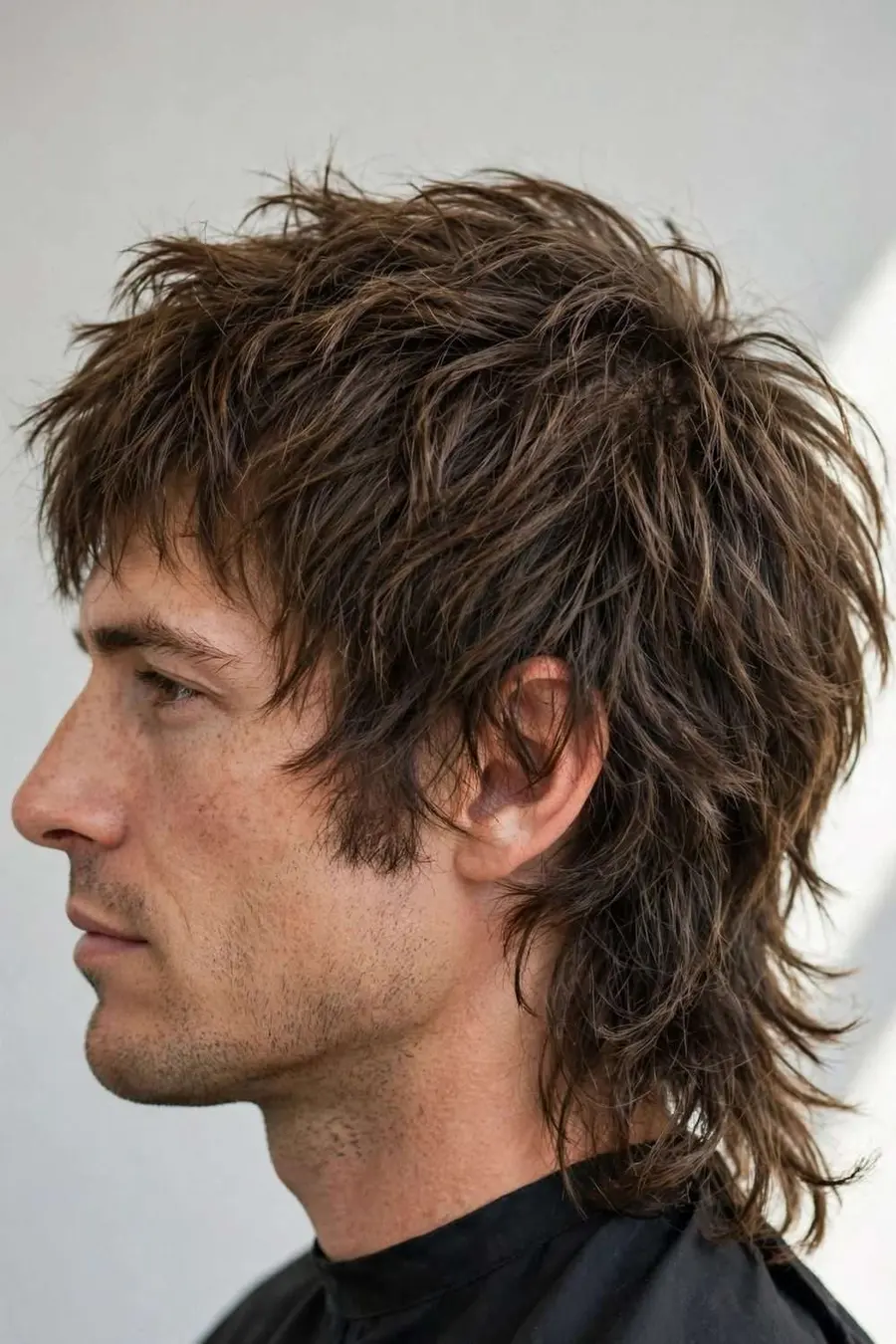
13. The shaggy mullet
Heavy layering everywhere: choppy pieces around the face, a feathered top, and a long, piecey back — the mullet at its most rock-and-roll, and the most forgiving grow-out of the thirteen. It suits wavy to curly, medium to thick hair and most face shapes. The top is 3–5 inches (8–13 cm), the sides layered rather than clipped, and the back 7–10 inches (18–25 cm). Maintenance is low: the mess is the style. Ask for: a shaggy mullet with heavy layers all over.
How to choose your modern mullet
Decide how loud the contrast should be. Shaved sides and mid fades make the two-length structure obvious from across the room; tapers and scissored sides soften it to a hint. There is no wrong answer, but there is a wrong one for your workplace — if you are unsure, the short, subtle and low-taper versions are the ones most men can wear anywhere.
Match the back length to your texture. Straight hair shows every inch of back length honestly, while curls spring up and read 2–3 inches (5–8 cm) shorter dry than wet, so curly versions need to be cut longer — and always dry. Our hair types guide explains how texture changes length and layering.
Think about the front view too. A mullet is judged from behind, but you live with the front: a fringe, a crop, or a swept-back top changes how the cut reads day to day more than the back does. If you prefer everything blended instead, compare these with our wolf cut ideas, the mullet’s softer cousin.
What to ask your barber
Use one sentence that covers the top, the sides and the back. For example: “I would like a modern mullet — textured top around 4 inches (10 cm), sides tapered short but not skinned, and the back left long at about 7 inches (18 cm).” Name your side treatment (fade, taper, shaved or scissored) explicitly, because that is where mullets go wrong. Always show a side and a back reference photo — the back is the whole point of the cut.
Frequently asked questions
Is a mullet appropriate for work?
The subtle versions usually are. A short back, tapered or scissored sides and a tidy front read as a normal short haircut from the front, which is what most dress codes actually judge. Faded and shaved versions are the ones to check against your workplace first. When in doubt, start subtle — length can be added at the next visit.
How long does hair need to be to get a mullet?
You need length at the back more than anywhere else: around 4–5 inches (10–13 cm) is enough for the subtle version, while the classic looks need 6 inches (15 cm) or more. The top and sides can start short. Most men grow into a fuller mullet over two or three cuts rather than arriving with one.
What is the difference between a mullet and a wolf cut?
Structure. A mullet keeps a clear two-length contrast — shorter front and sides, distinctly longer back. A wolf cut blends those zones with heavy layering all over, keeps more fullness at the sides, and looks shaggier overall. If you want the back length to be unmistakable, choose the mullet; if you want it suggested, choose the wolf.
How do I style a modern mullet day to day?
Most versions ask for very little: towel-dry, work a small amount of matte paste or sea-salt spray through the top for texture, and let the back fall naturally. Curly versions do better with a leave-in and air-drying. The daily effort is really about the front — thirty seconds on the top is the whole routine.
The modern mullet works because the contrast is a choice, not an accident — pick your side treatment and back length deliberately and it reads as a haircut, not a grow-out. Shortlist two or three versions, save side and back photos of each, and let your barber tune the back length to your collar on the day.
Keep exploring
- Wolf Cut Ideas for Men — the softer, fully layered cousin of the mullet.
- Medium & Long Hair for Men — longer men’s cuts beyond the mullet family.
- Fade Haircuts for Men — every fade type, for the mullet versions that use one.
- Barber Guides — clipper numbers and barber terms, explained plainly.
Save your favourite styles and follow DreamyTrims on Pinterest for new haircut ideas every week.