11 Beard Fade Styles
A beard fade is where two haircuts meet: the fade on the sides blends down into the beard, so the whole thing reads as one shape instead of a haircut plus a face full of hair. These 11 beard fade styles cover every combination that actually works in the chair — short beards with skin fades, full beards with low fades, salt-and-pepper beards, and the Italian beard fade that melts density into bare skin. Browse our full men’s haircut collection for the wider menu first.
One honest note: a beard fade lives or dies on the transition, and that only survives about 10–14 days before growth blurs it. Match the beard to your face shape and growth pattern first — a fade cannot fix patchy cheeks — and check our men’s face shape guide if you are unsure. Every style below lists the real beard length, how often it needs a barber, and the exact phrase to say in the chair.
Quick picks — the shortlist
- The Italian beard fade — density melts down into a skin fade; the trendsetter of the bunch.
- Stubble + mid fade — the lowest-maintenance combo on this list.
- Full beard + low fade — the classic office-safe heavyweight.
- Boxed beard + taper fade — sharp edges, neat silhouette, maximum polish.
11 beard fade styles to ask your barber for
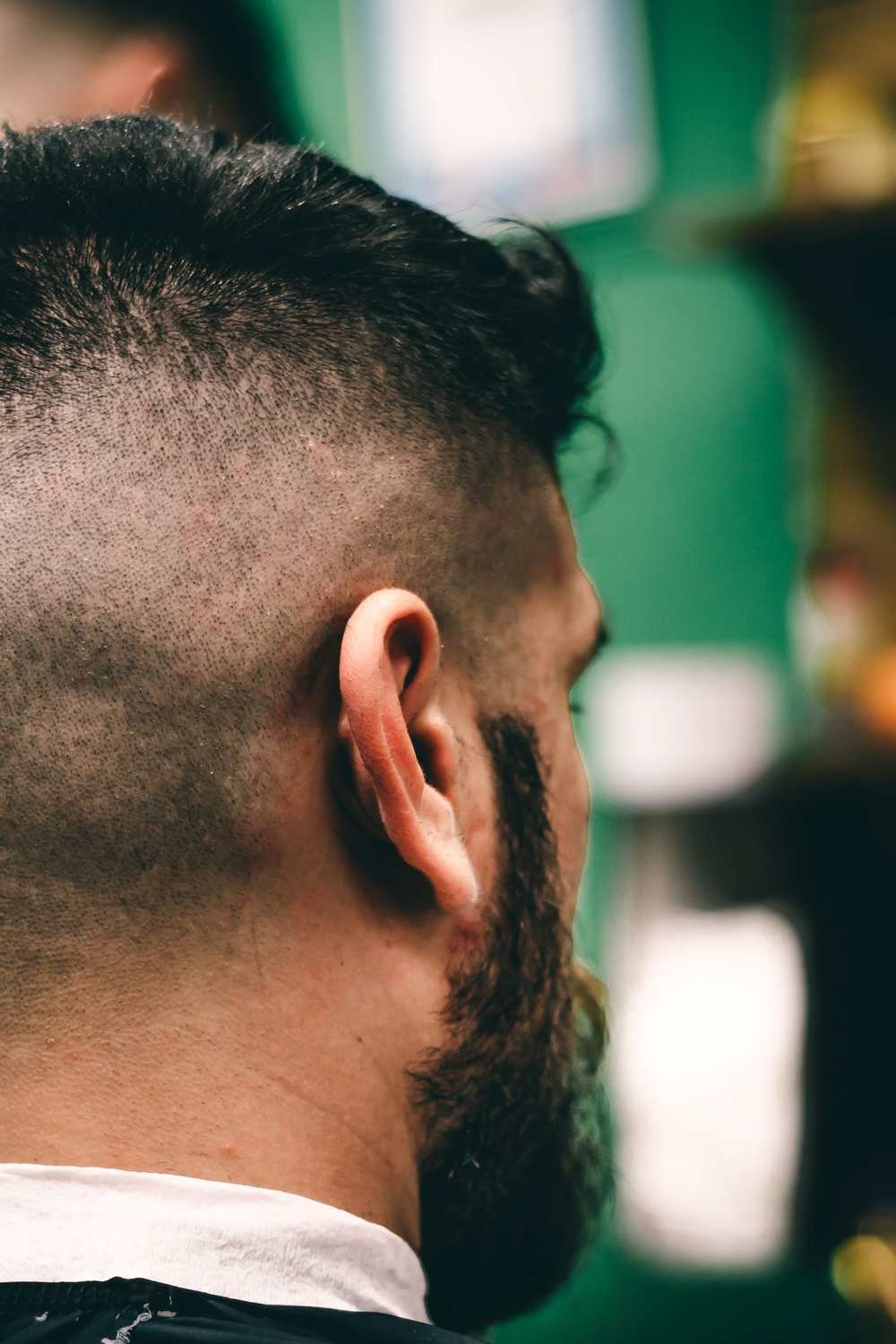
1. The Italian beard fade
The one everyone is asking for: instead of a hard line where the beard starts, the barber fades the cheek hair gradually down in density — like this back view where the skin fade rises up the neckline and the beard’s edges dissolve into it. It suits men with good cheek coverage, with a beard of about 0.5–1 inch (1.5–2.5 cm) and a skin fade on the sides. The blend needs a barber touch-up every 2 weeks; at home, oil and a soft brush keep the gradient looking intentional. Ask for: a beard fade with the cheek line faded down, no hard edges.
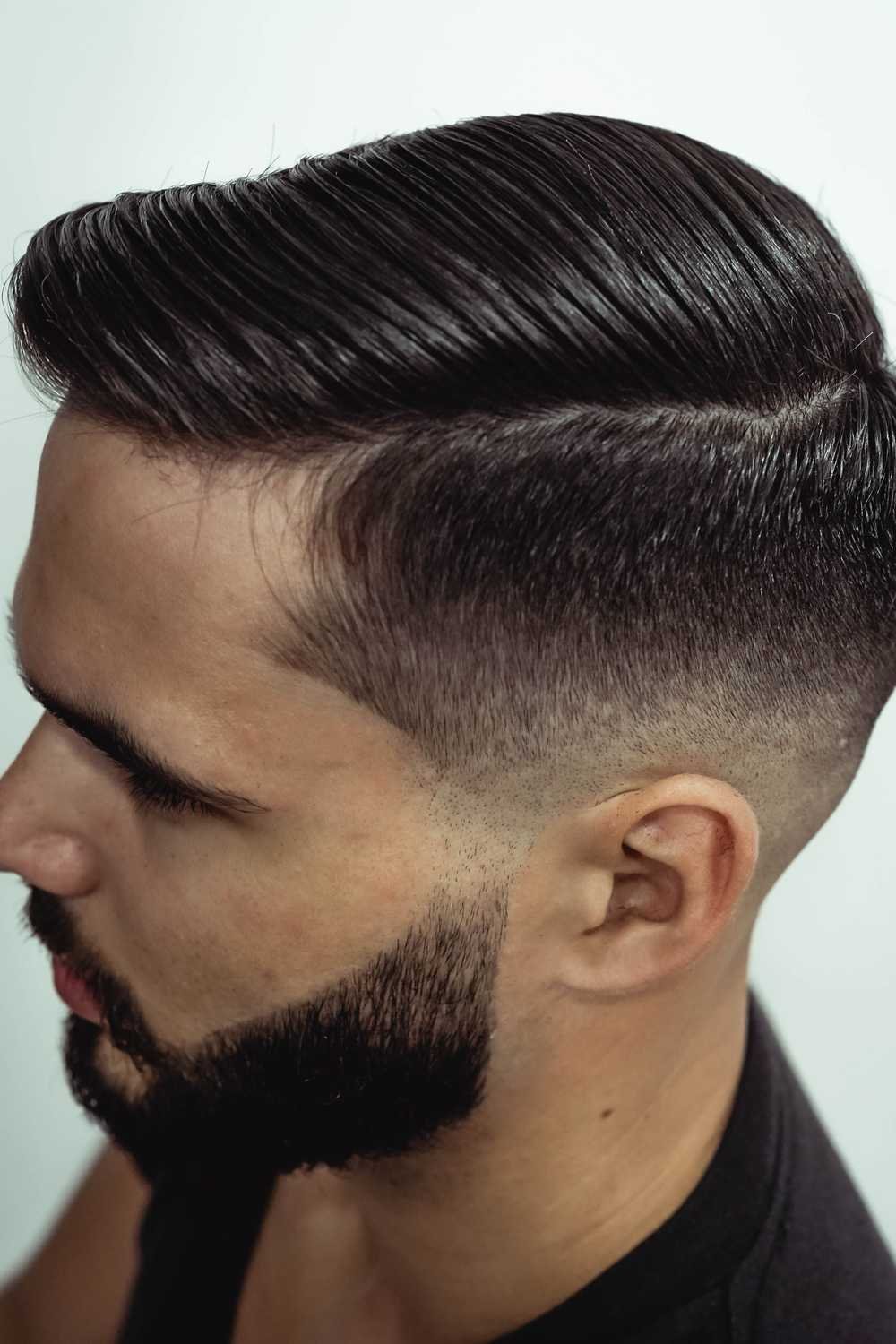
2. Stubble + mid fade
The laziest sharp look in grooming: 4–5 days of stubble (about 0.1–0.2 inches, 3–5 mm) worn under a clean mid fade, like the slick side profile here. It suits most face shapes and men who want a beard without the commitment, and it hides patchy growth better than longer beards do. Chair time is short: a fade every 2–3 weeks, and you only need a trimmer at home every 3–4 days to hold the stubble length. Ask for: a mid fade with stubble left at 4–5 mm, faded lightly into the sideburns.

3. Full beard + low fade
The heavyweight combination: a full 2–3 inch (5–8 cm) beard kept thick through the chin, while the hair fades low — just above the ears — so the sides stay tidy without stealing attention from the beard. This turtleneck portrait shows the balance exactly. It suits oval, long, and diamond faces best, and it is the most office-friendly of the longer-beard options. Budget 30 minutes of beard care every other day and a barber visit every 3 weeks to keep the low fade fresh. Ask for: a low fade, blended into the sideburns, with the full beard shaped but not thinned.
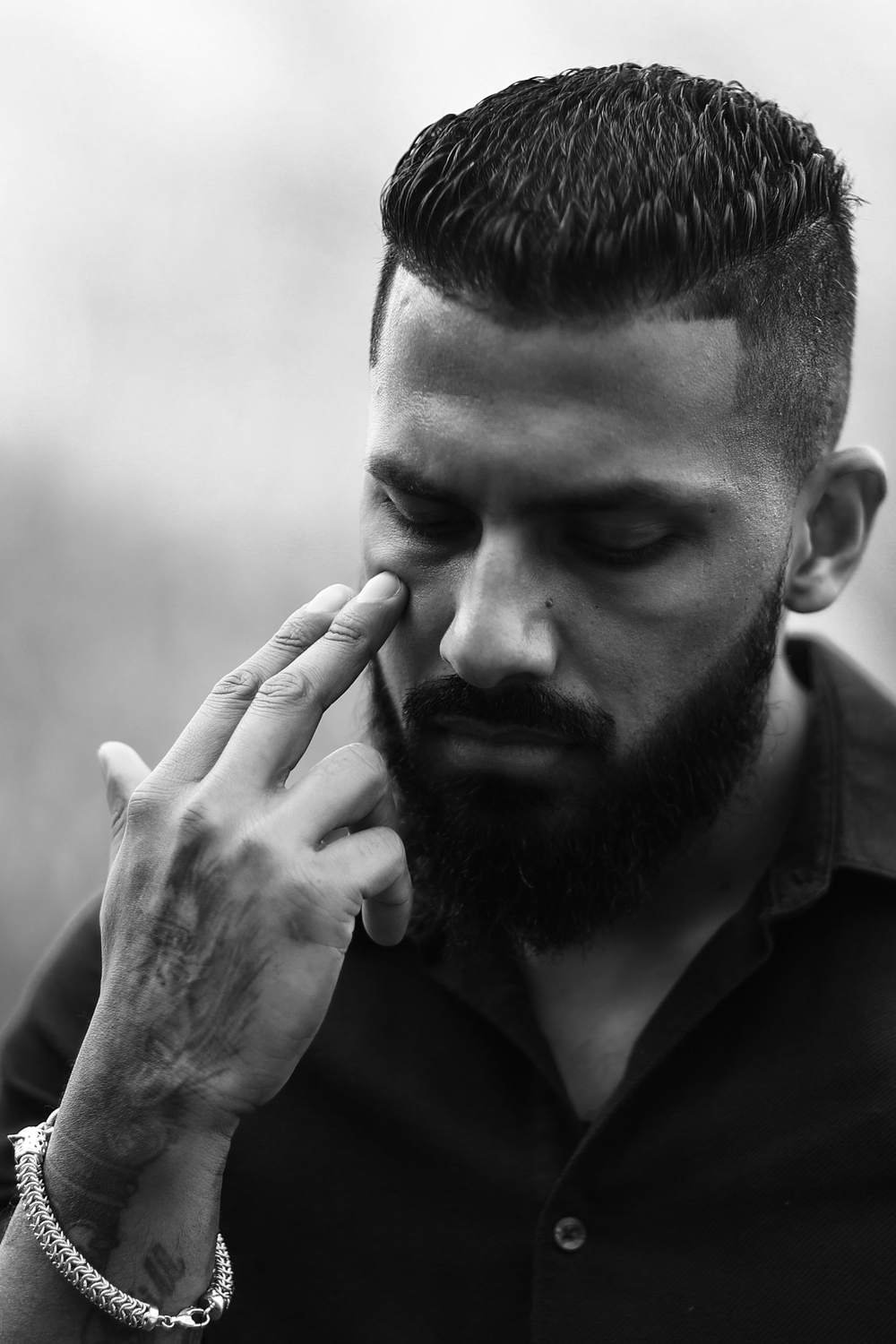
4. Medium beard + high fade
When the beard does the talking, the fade can go high: this high fade rises well above the temples, and the medium beard — about 1.5–2 inches (4–5 cm) — carries all the weight of the look. It suits men with dense, even growth, since the height on the sides visually lengthens the head. The contrast is bold, so it needs discipline: barber every 2 weeks to keep the high fade from growing out, plus 10 minutes of beard maintenance daily. This is not the choice for patchy cheeks. Ask for: a high fade with a natural hairline, blended into a medium boxed beard.
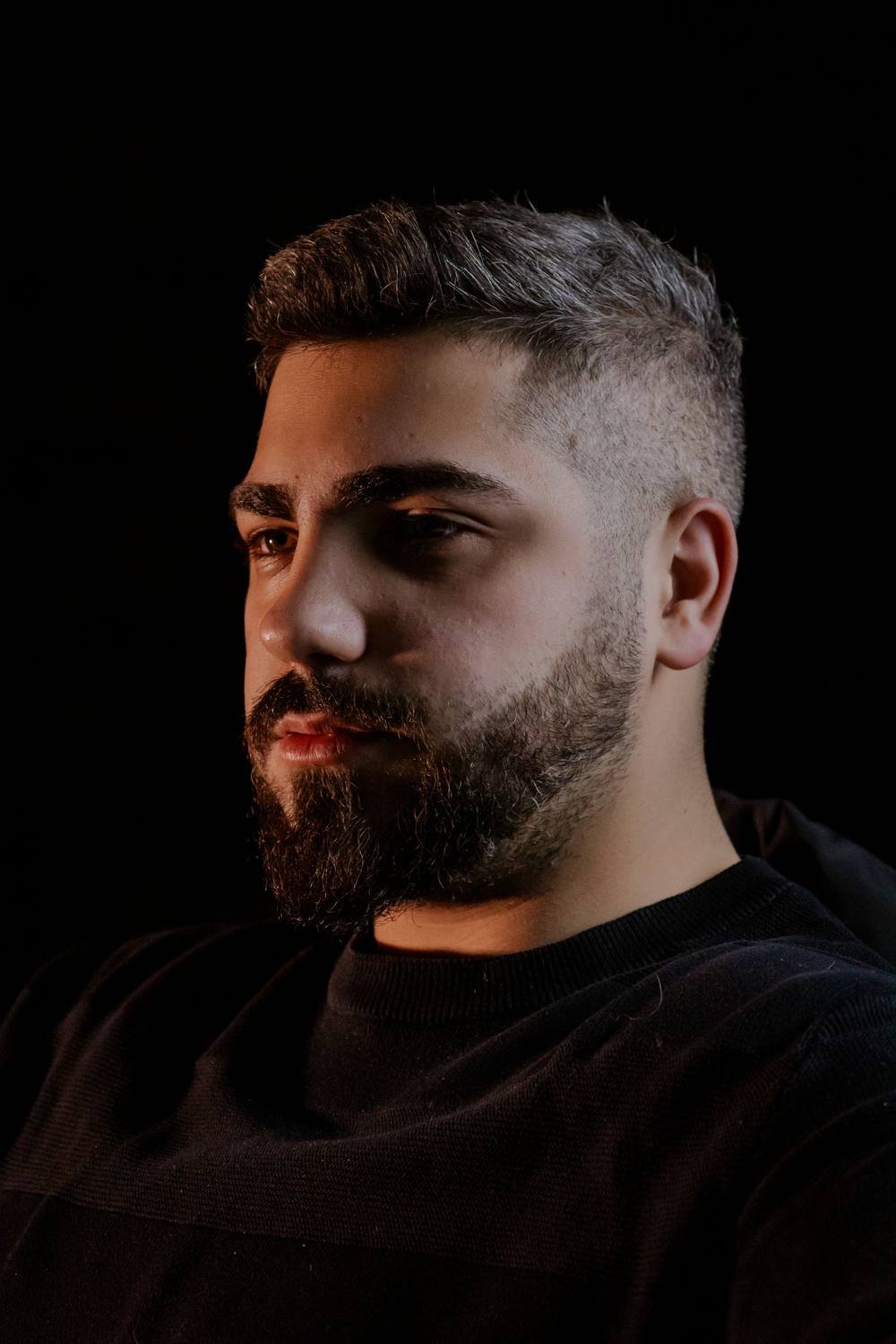
5. Boxed beard + taper fade
The boardroom version: a boxed beard — about 0.75–1 inch (2–2.5 cm), with every edge lined and squared — paired with a clean taper that hugs the sideburns and neckline, like the sculpted lines in this dark portrait. It suits square and heart-shaped faces. This is the highest-maintenance look per inch of hair: a barber lineup every 2 weeks, plus a trimmer pass on the cheek and neck lines every 2–3 days at home. If you like taper haircuts for men, this is their natural beard pairing. Ask for: a taper fade with the beard boxed and lined at the cheeks and neck.
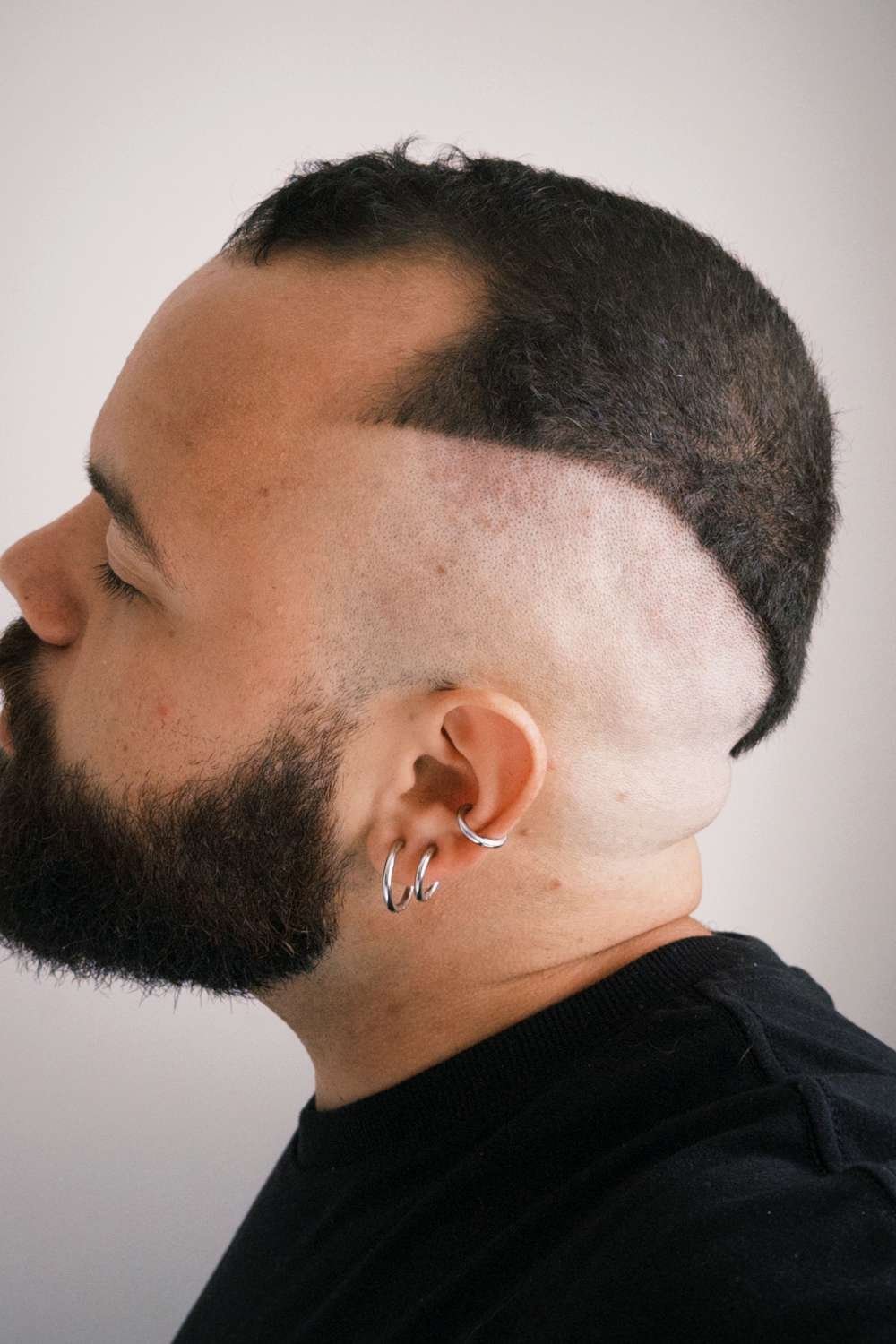
6. Short beard + skin fade
Maximum contrast: a short, even beard of about 0.5 inch (1.5 cm) sitting under a skin fade that drops to bare skin above the ears, as this sharp side profile shows — the fade melts from the temple straight down into the cheek line. It suits oval, square, and long faces, and it is a strong option for men whose beard grows thick but short, since nothing about it needs length. Expect a barber visit every 2 weeks (skin fades grow out fastest), and trim the beard to one guard setting weekly at home. Ask for: a skin fade blended down into a short beard, cheek line kept natural.
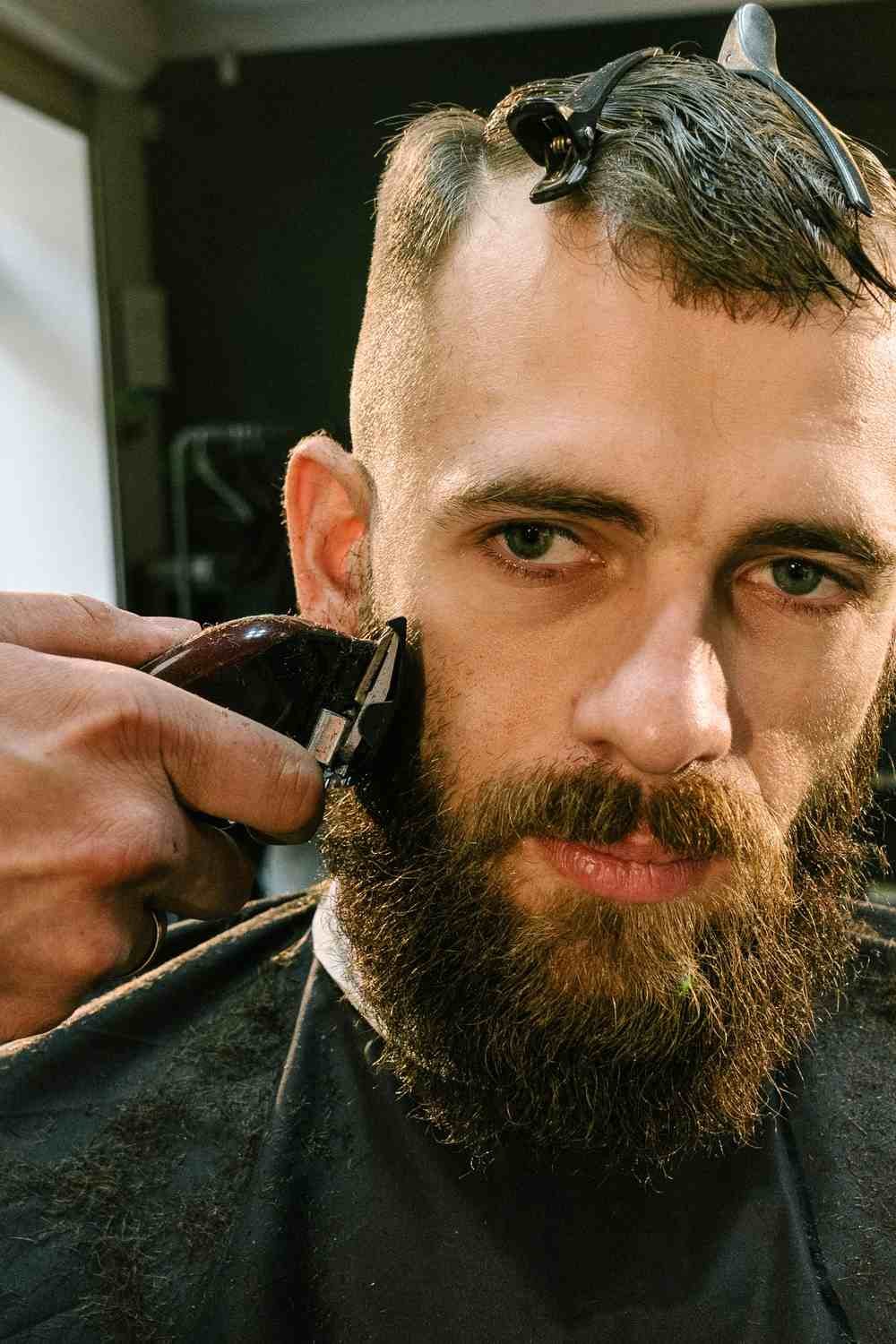
7. Tapered cheek-line beard fade
This one is about a single detail done perfectly: the barber tapers the cheek line of the beard — thinning it upward toward the ear — so the fade and the beard share one continuous gradient, like the trimmer work captured in this photo. The beard itself can be any length around 1–2 inches (2.5–5 cm). It adds about 10 minutes to your usual fade appointment and needs no extra home maintenance beyond your normal routine. Ask for: the cheek line tapered and faded into the sideburn fade, no straight cheek lines.
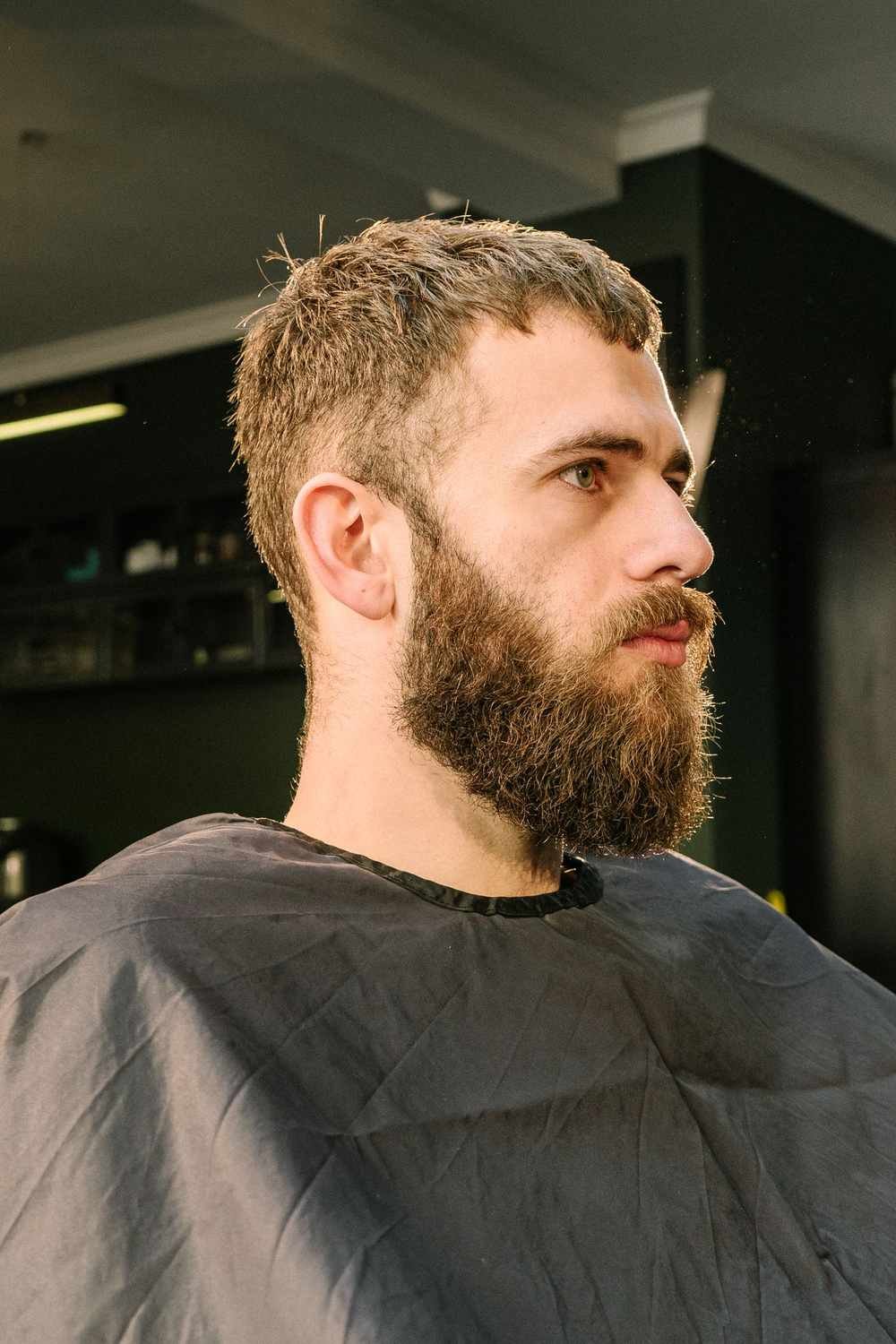
8. Full beard + mid fade
The crowd-pleaser: a full 2–3 inch (5–8 cm) beard with a mid fade starting halfway up the sides — the most balanced fade height for most men. It suits all face shapes and all beard textures, which is why barbers recommend it as the default first beard fade. Maintenance is moderate: a fade refresh every 2–3 weeks, beard trimmed to shape every 10–14 days, and daily brushing to keep the full beard from swallowing the fade’s transition. Ask for: a mid fade blended into the beard, with the beard’s fullest point kept at the chin.
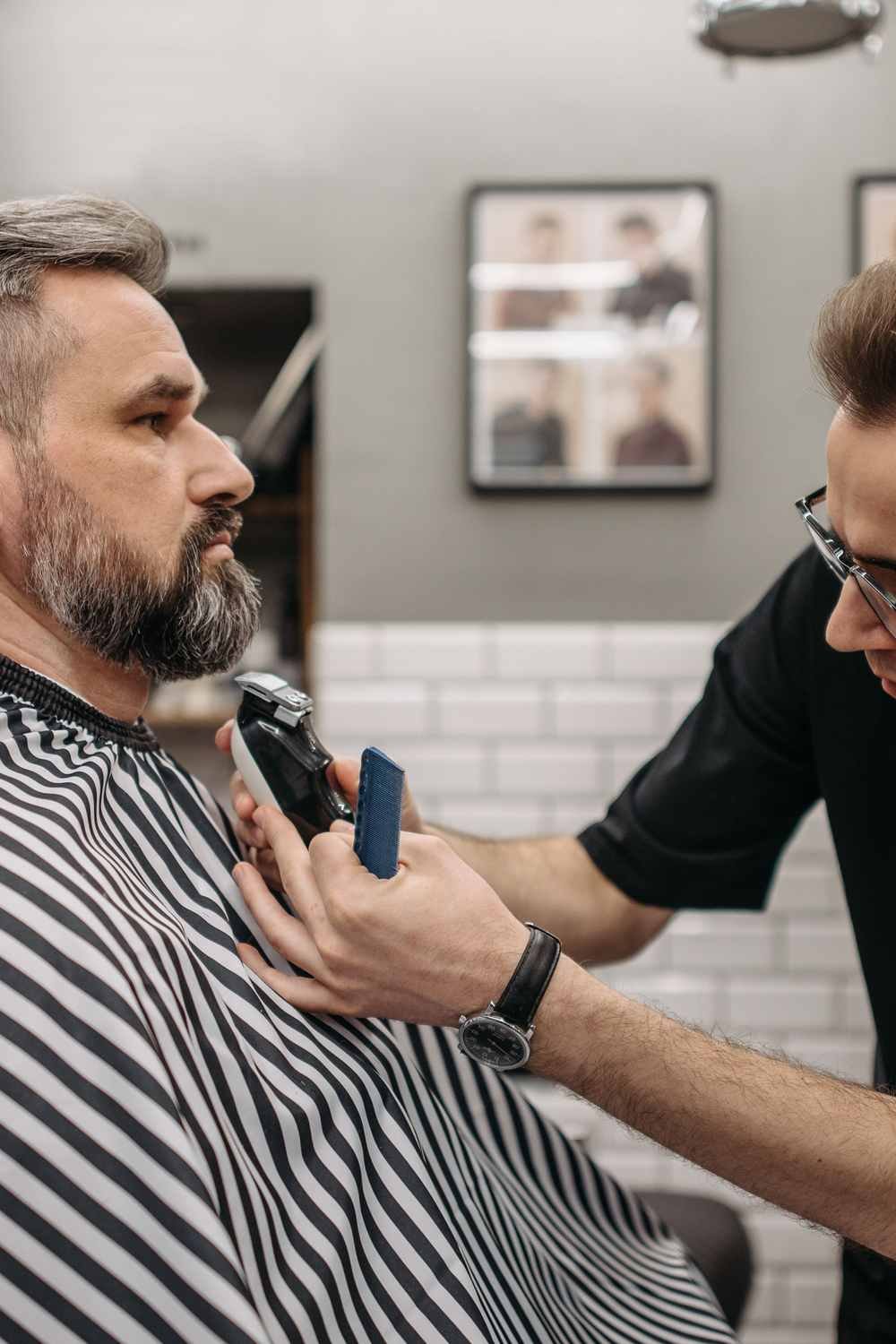
9. Salt-and-pepper beard + fade
Grey is an asset here: a salt-and-pepper beard of about 1–2 inches (2.5–5 cm) paired with a clean fade, like this barbershop portrait — the fade keeps the cut current while the grey reads as experience. It suits men in their late 30s and up with at least half-grey coverage. Grey beard hair is coarser, so condition it daily and keep the shape fuller than you think; over-thinning exposes the skin. Barber every 2–3 weeks for the fade, beard shaped monthly. Ask for: a mid fade with the salt-and-pepper beard shaped full through the cheeks, no thinning.

10. Long beard + fade with a sharp lineup
The statement look: a long beard, 4 inches (10 cm) or more, kept neat with a razor-sharp lineup, while the hair fades cleanly on the sides — this red-bearded portrait shows the formula, with the top trimmed to keep the silhouette from going top-heavy. It suits men with strong, fast growth and oval or oblong faces. This is the highest-commitment style on the list: 15 minutes of daily beard care and a barber every 2–3 weeks. For longer head hair to match, see our medium and long hairstyles for men. Ask for: a fade on the sides with the long beard lined up at the cheeks and the neckline trimmed high.
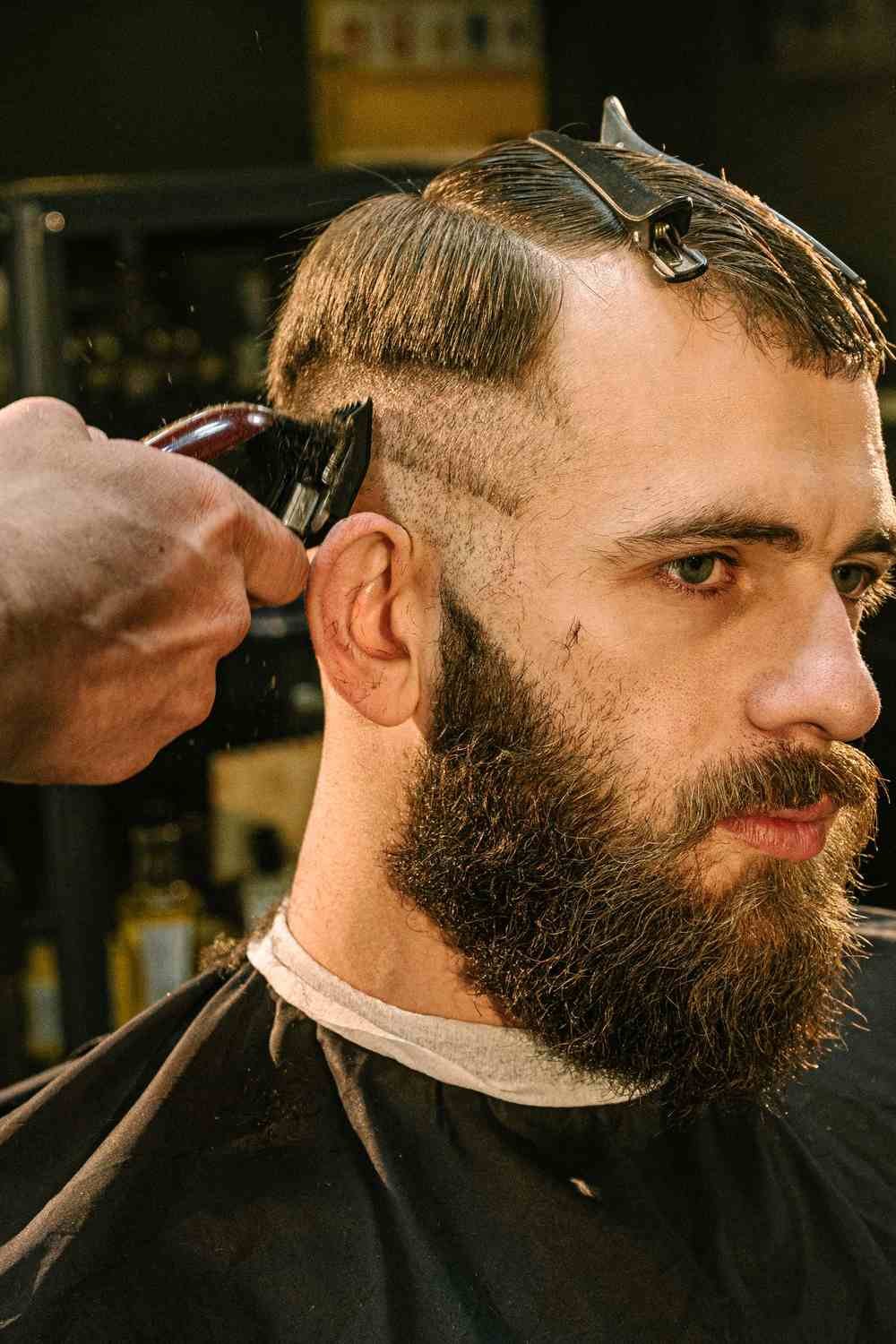
11. Sharp temple blend into a full beard
The detail-obsessed choice: the fade begins high at the temple and melts down through the sideburn into a full beard, with the temple corner shaped into a clean point — the clipper work in this photo shows the blend being cut in real time. It suits men with dense growth from temple to jawline. The temple blend is the fastest part to grow out, so plan on a barber visit every 2 weeks; at home, a weekly trimmer pass between the ear and the cheek line holds the point. Ask for: a fade that starts at the temple and blends through the sideburn into the full beard, with the temple corner shaped sharp.
How to choose the right beard fade
Start with your growth, not your ambition. Stubble and short beards forgive almost everything — patchy cheeks, slow growth, a busy schedule — while medium and long beards need density and a real habit. A simple rule: the shorter the beard, the higher the fade can go, and the longer the beard, the lower the fade should stay.
Then match the beard to your face. Round faces gain structure from boxed beards with defined cheek lines; long faces look better with fuller cheeks and a low fade that keeps width at the sides. If you are between shapes, our face shape finder settles it in under a minute. Be honest about barber frequency too: a skin fade or Italian beard fade is a two-week commitment, while a low fade with a full beard stretches to three.
Finally, bring the photo to the chair. Describe the fade height (skin, high, mid, low), the beard length in inches, and how the two should meet — faded blend or defined cheek line. Those three facts are the whole language your barber needs.
What to ask your barber
One clear sentence covers it: “I want a mid fade blended into a full beard about two inches long, with the cheek line faded rather than drawn straight.” Say the fade height, the beard length, and whether you want the transition blended or lined. Mention how often you will come back — a good barber sets the blend knowing whether it must survive two weeks or four. And show the photo: with fades, the back and side views carry the information.
Frequently asked questions
What fade goes best with a beard?
There is no single best fade — the rule is balance. Short beards pair well with higher or skin fades; longer beards work better with low or mid fades, so the haircut does not fight the beard for attention. If it is your first beard fade, a mid fade is the safest starting point for almost every beard length.
How do I keep the fade and beard blending smoothly as the hair grows?
The transition blurs after about 10–14 days, which is why most beard fades need a barber visit every 2–3 weeks. Between visits, trim the beard to its set length with a guarded trimmer and keep the cheek line tidy — but do not touch the fade area yourself, because one wrong pass turns a gradient into a visible step.
Does a beard fade work with a patchy or thin beard?
It works, but choose the right style. Stubble and short beards (styles 2 and 6) hide patchiness well because the short length keeps everything even. Avoid the Italian beard fade and the tapered cheek line with thin growth — both need enough density to build a smooth gradient.
How often should I get a beard fade touched up?
Skin fades and Italian beard fades: every 2 weeks, without exception. Mid and high fades: every 2–3 weeks. Low fades with longer beards: up to 3 weeks. The beard itself needs shaping every 2–4 weeks depending on length, and boxed or lined styles need a trimmer touch-up at home every few days to hold their edges.
The right beard fade makes the haircut and the beard look like one decision instead of two accidents. Shortlist two or three styles that fit your growth and your schedule, save the side and back photos, and tell your barber the fade height and the beard length — the blend will take care of the rest.
Keep exploring
- 13 Modern Mullet Haircuts for Men — bolder men’s cuts with the same sharp sides.
- Quiff Hairstyles for Men — a longer top that pairs well with a faded beard.
- Men’s Short Haircuts — the full short-hair hub, fades included.
Save your favourite styles and follow DreamyTrims on Pinterest for new haircut ideas every week.